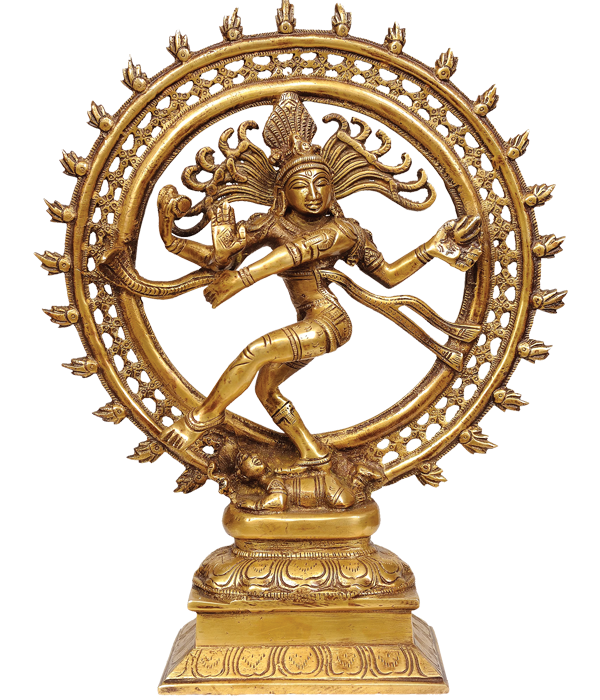
Bharatanatyam
Bharatanatyam is one of the most ancient classical dance traditions of India, expressed through three essential elements — Nritta (pure rhythmic movement), Nritya (expressive dance), and Natya (dramatic storytelling). Originating in South India, it is renowned for its grace, intricate rhythm, and sculptural poses.
This timeless art form traces its roots to the Natya Shastra, an ancient treatise on dance, drama, and music attributed to the sage Bharata. The very word Bharata reflects the essence of the art: Bha for Bhava (expression), Ra for Raga (melody), and Ta for Tala (rhythm).
Bharatanatyam is distinguished by its geometric precision, rhythmic sophistication, and rich language of gestures. Through the harmonious blend of movement, music, and expression, it conveys the soul's longing for union with the divine.
The term Arangetram comes from Tamil, meaning the dancer's ascent onto the stage (arangam). It marks the debut solo performance in which the dancer presents the traditional Margam — a complete repertoire demonstrating mastery of both Nritta and Nritya. Achieving this milestone requires years of dedicated and disciplined training. The Arangetram signifies the dancer's formal transition from student to accomplished performer. In Tamil, the word 'Arangetram' literally means climbing the raised stage.